
Quick Summary:
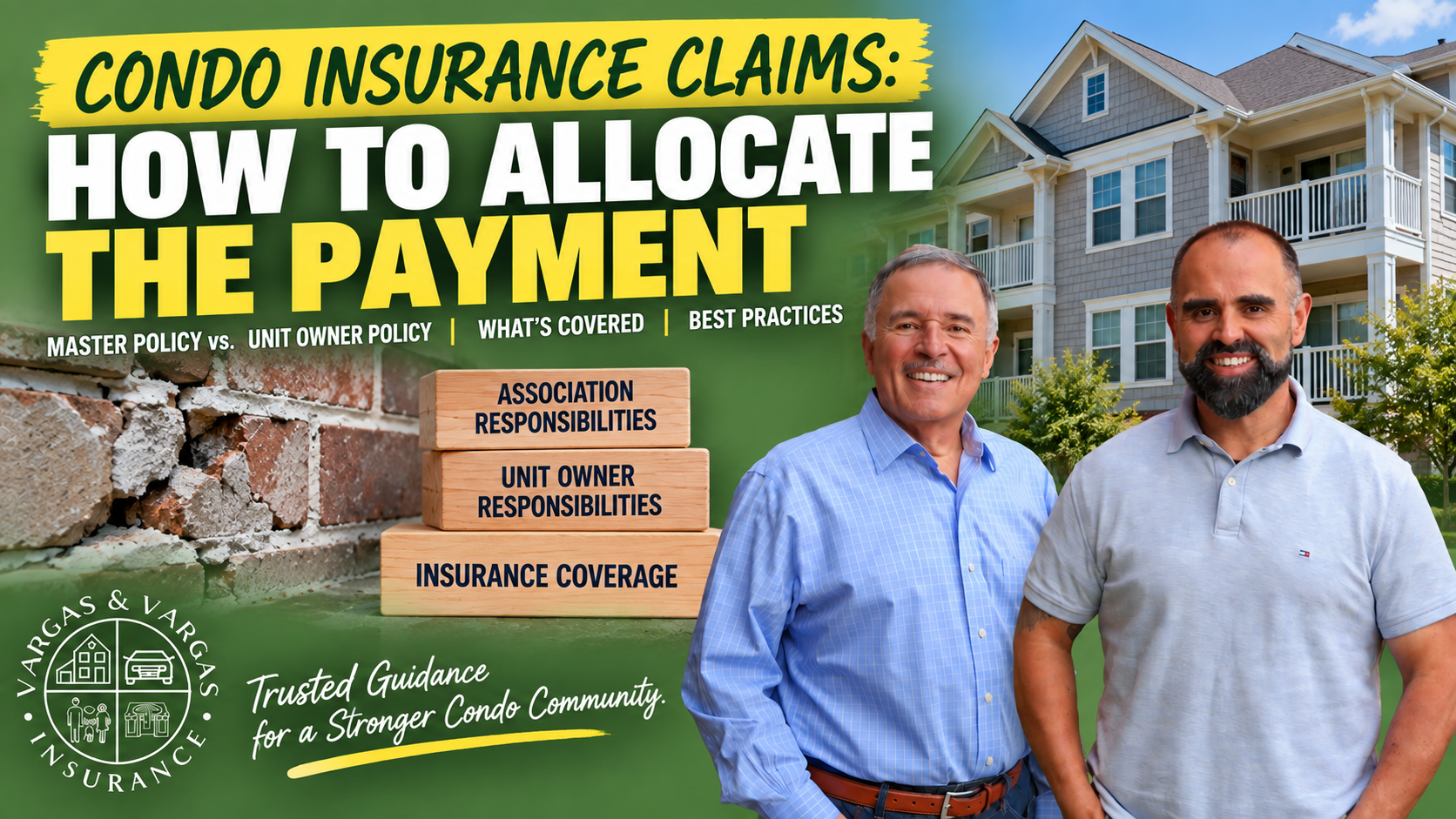
When a condominium association receives an insurance claim payment, the trustees should not rush to divide the funds among affected unit owners. First, they need to understand what the insurer paid for, review the condominium’s governing documents, account for the deductible and any recoverable depreciation, and determine which repairs the association is responsible for coordinating. The right path depends on the policy, the facts of the loss, and the condominium documents.
When property damage affects a condominium building, the repair itself can feel urgent—but the insurance payment can create an equally important question: who should receive the money, and who should arrange the repairs?
Imagine ice damages mortar on an exterior wall. Water enters through the damaged area and causes damage inside one or more units. The condominium association reports the loss under its master policy, the insurer approves the claim, and a check is issued to the condominium trust. It may be tempting to simply write checks to the affected owners. But that approach can create problems if the payment was intended to cover work the association is obligated to perform.
For condominium associations across Boston, Dorchester, Quincy, Cambridge, and the rest of Massachusetts, a careful, documented process can help trustees make sound decisions and avoid unnecessary disputes.
Begin With the Insurer’s Detailed Estimate
Before allocating any claim money, request the detailed estimate, scope of loss, or settlement breakdown prepared by the insurance company or claims adjuster. The total amount of the check is not enough information on its own.
The estimate may separate costs for:
- Exterior masonry, mortar, roofing, siding, or other common-area repairs
- Drywall, plaster, paint, flooring, or other interior repairs
- Labor, materials, and debris removal
- The policy deductible
- Depreciation withheld until repairs are completed
- Amounts that may be subject to policy limits or exclusions
If the settlement information is unclear, ask the adjuster to explain how the amount was calculated. Trustees should be able to identify what portion of the payment relates to common elements, what portion relates to unit interiors, and whether the carrier expects documentation before releasing any remaining funds.
At Vargas & Vargas Insurance Agency, we encourage condo trustees to treat the insurer’s estimate as a starting point for informed decision-making—not as an instruction to distribute the entire payment immediately.
The Master Policy Does Not Tell the Whole Story
A common misconception is that damage inside a unit is always the unit owner’s responsibility, while damage outside the unit always belongs to the association. In practice, condominium insurance is more nuanced.
The master policy must be read alongside the condominium declaration, bylaws, trust documents, rules, and any relevant amendments. Those documents may define the association’s maintenance and repair obligations differently from the physical boundaries people see every day.
For example, the association may be responsible for repairing certain original building components within a unit, while the owner may be responsible for improvements, upgrades, personal property, or particular finishes. Another association’s documents may allocate those responsibilities differently. That is why trustees should avoid relying on assumptions or a one-size-fits-all rule.
When there is uncertainty, the association’s condominium attorney can help interpret the governing documents. An insurance agency can help explain the insurance side of the claim, but legal responsibility for repairs may require legal guidance.
Understand the Unit Owner’s HO-6 Coverage
A master policy is often only one part of the insurance picture. Individual unit owners commonly carry condominium insurance, often called an HO-6 policy. Depending on the specific policy and facts of the loss, that coverage may respond to personal property, interior improvements, certain building items, additional living expenses, personal liability, or loss assessments.
This means more than one policy may be involved after a water loss, fire, storm event, or other covered claim. The association should not assume that its master policy pays for every item in the unit. At the same time, unit owners should not assume their HO-6 policy replaces the association’s obligations under the master policy or condominium documents.
Clear communication is essential. Trustees can explain what they know about the association’s claim while encouraging affected owners to report the loss to their own insurer promptly. Each carrier can then evaluate coverage under its own policy language.
Decide Who Should Coordinate the Repairs
Receiving the claim payment does not automatically decide who hires the contractor. Before giving funds directly to an owner, trustees should determine whether the association is required to coordinate some or all of the repair work.
When repairs involve common elements, building systems, exterior construction, or work that must be coordinated across several units, association-managed repairs may be the most practical approach. It can promote consistent workmanship, reduce the risk of incomplete repairs, and make it easier to document the completed work for the insurer.
There may be situations where an owner is responsible for a portion of the work, particularly where damaged property falls outside the association’s obligations. But trustees should make that decision only after reviewing the settlement estimate and governing documents. Handing over money first and asking questions later can make it harder to ensure repairs are completed properly.
Address the Deductible and Recoverable Depreciation
Two details frequently complicate claim payments: the deductible and recoverable depreciation.
The deductible reduces the amount paid by the insurer. How that cost is handled may be addressed in the association’s governing documents, applicable insurance provisions, or the circumstances of the loss. For example, responsibility may depend on whether the damage originated from a common element, a unit component, or an owner’s act or omission. Trustees should document the basis for their decision rather than applying the cost arbitrarily.
Recoverable depreciation is another key issue. Some settlement payments include an initial amount based on actual cash value, with additional funds available after repairs are completed and supporting invoices are submitted. If trustees distribute the initial payment without a plan, the association may lack the documentation or control needed to recover the remaining amount.
Five Questions Trustees Should Answer
Before distributing insurance proceeds, the board should be prepared to answer these questions:
- What exactly did the insurance company pay for?
- What deductible was applied, and how should it be handled?
- Which repairs are the association’s responsibility under its documents?
- Which damaged items are the unit owner’s responsibility or potentially covered by an HO-6 policy?
- Is any depreciation being withheld until repairs are complete?
If the answer to any of these questions is unclear, pause and ask the appropriate professional. A well-documented decision today can prevent significant confusion later.
FAQ
Can a condo association simply divide a claim check among affected owners?
Not necessarily. The payment may include funds intended for common-element repairs or work the association is obligated to coordinate. Trustees should review the carrier’s estimate and condominium documents before allocating money.
Does the master policy cover everything inside a condominium unit?
No. Coverage depends on the policy language, endorsements, the type of property damaged, and the condominium’s governing documents. A unit owner’s HO-6 policy may also be relevant.
Who pays the master-policy deductible after a condo claim?
That depends on the association’s documents, insurance provisions, and the facts of the loss. Trustees should review the applicable language and obtain legal advice when necessary.
Why does recoverable depreciation matter?
It may represent money the insurer will release only after covered repairs are completed and documented. Coordinating repairs and retaining invoices can be necessary to collect it.
When should a condo association contact an insurance professional?
Contact an insurance professional as soon as a claim raises questions about the master policy, settlement estimate, deductible, or potential overlap with unit-owner coverage. Contact a condominium attorney when repair obligations or governing-document interpretation are disputed or unclear.
A claim is often the moment when trustees and unit owners discover how their condominium insurance truly works. Vargas & Vargas Insurance helps Massachusetts condo associations and unit owners better understand their coverage before and after a loss. As a Dorchester-based independent insurance agency, we can help you ask informed questions, compare coverage options, and identify issues to discuss with your carrier, adjuster, property manager, or attorney.
Have questions about condominium insurance in Massachusetts?
Contact Vargas & Vargas Insurance Agency to discuss your master policy, your HO-6 coverage, or the insurance questions that arise after a loss.
This article is for general educational purposes only. It is not legal advice and does not determine insurance coverage. Actual coverage and repair responsibilities depend on the specific policies, endorsements, facts of the loss, and condominium governing documents.