

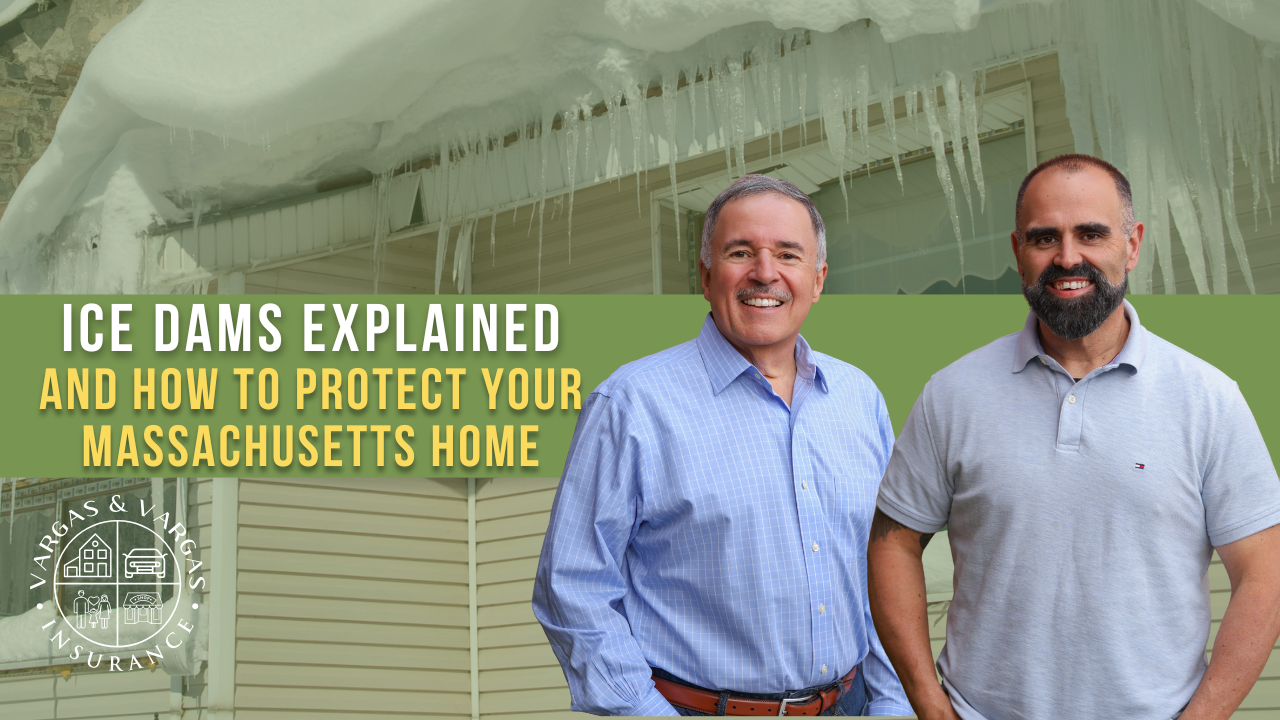
Do you know if your homeowner’s insurance would actually cover water damage from an ice dam?
When was the last time you reviewed your policy—or are you assuming
you’re fully protected?
Here’s the reality: Every winter in Massachusetts, homeowners find out the hard way that their policy doesn’t cover as much as they thought—especially when it comes to damage caused by ice dams.
And if you’ve lived through a New England winter, you already know the setup: heavy snow, constant freezing and thawing, and long stretches of bitter cold. These conditions make ice dams not just possible—but likely.
From the street, those icicles may look harmless, even beautiful. But behind them is a major threat to your home’s roof, insulation, ceilings, and walls.
In this article, we’ll walk you through:
- What ice dams are and why they form
- How to safely prevent and remove them
- What your insurance may (or may not) cover when damage happens
- How preventing ice dams protects both your home and your insurance policy
What Is an Ice Dam?
An ice dam forms when snow on your roof melts, flows downward, and then refreezes at the colder roof edge (the eaves). Over time, this ice builds up and traps water behind it.
Here’s how it usually happens:
- Heat escapes from inside your home
- The warm roof melts the snow on top
- Melted water flows downward
- When it reaches the colder eaves, it refreezes
- Ice builds up and forms a dam
- Additional meltwater backs up behind the dam with nowhere to go
Once trapped, that water begins working its way beneath shingles—and that’s when the real damage begins.
Why Ice Dams Cause Damage
Your roof is designed to shed water downward, not stop water from moving upward. When water backs up behind an ice dam, it can:
- Slip under shingles
- Saturate the roof deck
- Soak insulation
- Leak into ceilings and walls
This often leads to:
- Ceiling stains or bubbling paint
- Sagging or wet drywall
- Mold growth
- Damage to flooring and personal belongings
In Massachusetts, where snow commonly sits on roofs for long periods, ice dam–related leaks are one of the top winter insurance claims.
The Best Ways to Prevent Ice Dams
The goal is simple: stop melting snow from refreezing at the roof edge.
1. Clear Snow from the Roof Edge
After heavy snow, use a roof rake to clear the bottom 3–4 feet of snow. You don’t need to clear the entire roof—just enough to allow proper drainage.
Important:
Always rake from the ground. Avoid ladders in winter.
2. Use Calcium Chloride—Not Salt
If an ice dam is already formed, calcium chloride can help melt channels through the ice.
A common method:
- Fill a sock or pantyhose with calcium chloride
- Lay it perpendicular across the ice dam
- Let it gradually melt a drainage path
Avoid completely: rock salt, sodium chloride, or other melting agents not designed for roofs—they damage shingles, gutters, siding, and landscaping.
What NOT to Do (Very Important)
Each winter, we see homeowners try these dangerous methods:
- ❌ Chipping ice with hammers or chisels
- ❌ Using blow torches or open flames
These can:
- Crack shingles
- Rip roof membranes
- Cause fires
- Lead to major repairs and denied claims
If the ice dam is severe or unsafe to handle, call a professional.
Will Insurance Cover Ice Dam Damage?
Massachusetts homeowners often ask this—and the answer is: sometimes.
Insurance may cover:
- Interior water damage
- Ceiling, drywall, and insulation repairs
- Damage caused by water intrusion behind the ice dam
Insurance typically does NOT cover:
- Removing snow or ice from your roof
- Routine or preventive maintenance
This is why reviewing your policy before winter is essential.
The Long-Term Fix
If you struggle with ice dams every winter, the real solution often lies inside your home:
- Seal attic air leaks
- Add insulation to reduce heat loss
- Improve attic ventilation
A colder, well‑ventilated attic keeps the roof temperature uniform—reducing the melt‑refreeze cycle.
How Ice Dam Prevention Protects Your Insurance Policy
Here’s something most homeowners don’t realize:
Preventing ice dams doesn’t just protect your home— it protects your insurance policy and your premiums.
Why prevention matters:
- Fewer claims = lower chances of premium increases
- Too many water claims can cause insurers to classify you as “higher risk”
- Multiple claims in a short period can lead to non‑renewal (policy cancellation)
- Every insurance company tracks claim frequency when deciding whether to renew
Since all insurance companies consider ice dam damage largely preventable, keeping your roof maintained and addressing ice buildup early can make a big difference in your long‑term insurability.
At Vargas & Vargas Insurance Agency, we explain your coverage in plain English so you understand exactly what’s protected before winter storms hit.
If you have questions about ice dams, winter claims, or want a quick, no‑pressure policy review, call us at 617‑298‑0655. We’re always happy to help.