
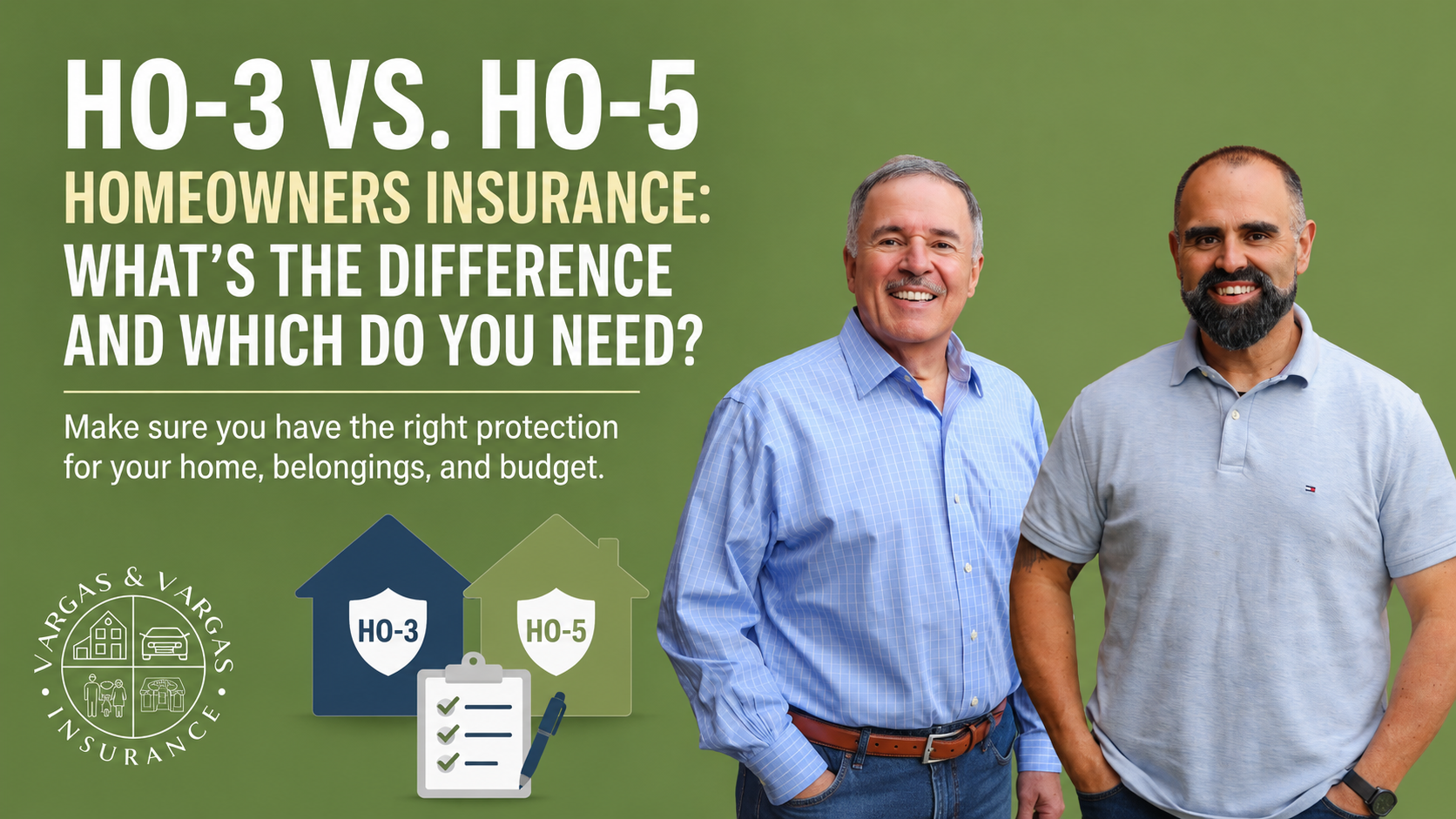
For many Massachusetts homeowners, an HO-5 policy can be worth the additional cost because it generally provides broader protection for personal belongings than a standard HO-3 policy. The right choice depends on your home, the value of what you own, your claims history, and whether broader coverage is available through your insurer.
When you purchase homeowners insurance, the first question is usually, “Am I covered?” A more useful question is, “How well am I covered if something unexpected happens?” Understanding the difference between an HO-3 and an HO-5 policy can help you avoid surprises when you need to file a claim.
What Is an HO-3 Homeowners Insurance Policy?
An HO-3 is the most common type of homeowners insurance policy in Massachusetts and across the country. It generally provides open-perils coverage
for the structure of your home. In other words, your house is covered for damage unless the cause of loss is specifically excluded by the policy.
Your personal belongings are typically handled differently under an HO-3 policy. Contents such as furniture, clothing, electronics, and other household items are usually protected only against certain named causes of loss, often called named perils.
Common named perils may include fire, theft, windstorm, smoke, lightning, vandalism, and certain types of water damage. But if a loss is not listed as a covered peril, the policy may not cover it. Exact protections and exclusions vary by insurer, so reviewing the specific language in your policy is important.
What Is an HO-5 Policy?
An HO-5 is generally considered the broadest standard homeowners policy available. Like an HO-3, it usually provides open-perils coverage for the dwelling. The major difference is that it generally extends open-perils coverage to your personal property as well.
That means an HO-5 starts from a broader position: your belongings may be covered unless the policy specifically excludes the cause of loss. Rather than looking first for a named peril that applies, the focus often becomes whether an exclusion applies to the claim.
This does not mean every loss is covered. Homeowners insurance still has exclusions, deductibles, coverage limits, and conditions. However, broader personal property protection can be especially meaningful for households with newer furnishings, electronics, collectibles, musical instruments, jewelry, or other higher-value items.
The Biggest Difference: How Your Belongings Are Covered
Consider a simple example. An expensive camera falls and breaks after a shelf unexpectedly collapses. With an HO-3 policy, the question may be whether the cause of loss is one of the named perils listed in the policy. With an HO-5 policy, the question may instead be whether that cause of loss is specifically excluded.
That distinction can make a meaningful difference in how certain personal property claims are evaluated.
Many HO-5 policies also include replacement cost coverage for personal belongings, although this is not automatic in every case. Replacement cost coverage is designed to help replace a covered item at today’s cost rather than paying only its depreciated value. Vargas & Vargas Insurance Agency recommends reviewing both the type of coverage and the settlement method for your belongings—not simply the policy form printed on the declarations page.
Does Every Massachusetts Homeowner Qualify for an HO-5?
No. Not every insurer offers a true HO-5 policy, and not every homeowner will meet an insurer’s underwriting guidelines for one.
Because HO-5 policies generally provide broader coverage, carriers may reserve them for homes and homeowners that meet certain qualifications. Eligibility can depend on factors such as:
- The age, condition, and replacement cost of the home
- Whether the home has been substantially renovated
- Your prior claims history
- The property’s location and local risk factors
- The insurer’s current underwriting guidelines
Some companies do not use the term “HO-5” at all. Instead, they may offer an enhanced homeowners package or premium policy with similar—or sometimes broader—protection. This is one reason an independent insurance agency can be helpful: policies with similar names can provide very different levels of coverage.
Can You Improve an HO-3 Policy Instead?
If an HO-5 is unavailable or does not fit your budget, you may still be able to strengthen an HO-3 policy with endorsements. Endorsements are additions that modify a policy’s coverage.
For example, some insurers offer a Special Personal Property Endorsement that broadens protection for belongings. Others offer Replacement Cost Contents coverage, which can help replace covered personal property without deducting depreciation. Depending on the carrier and the endorsements available, an enhanced HO-3 policy may provide protection similar to many benefits associated with an HO-5.
At Vargas & Vargas Insurance, we help homeowners in Dorchester, Boston, Quincy, Cambridge, and throughout Massachusetts compare the actual coverage—not just the premium or policy label.
How Much More Does an HO-5 Cost?
Cost is understandably one of the first questions homeowners ask. In Massachusetts, an HO-5 policy may cost roughly 5% to 20% more
than a comparable HO-3 policy. The actual difference can vary substantially based on the insurer, home location, age and condition of the property, claims history, deductibles, limits, and available discounts.
For some households, the added cost may be only a few dollars per month. For others, it may be more significant. The important comparison is not simply the annual premium—it is the coverage you would have if your personal belongings were damaged or destroyed.
When Is an HO-5 Worth Considering?
An HO-5 or enhanced HO-3 may be worth considering if you have substantial personal property to protect, prefer broader coverage, or want fewer gaps created by named-peril limitations. It may also make sense if replacing your belongings after a loss would create financial strain.
However, more coverage is not automatically better for every household. The goal is to find protection that fits your home, family, budget, and comfort with risk. Vargas & Vargas Insurance Agency can compare available options and explain the differences in plain English.
Questions to Ask Before Your Next Renewal
Before renewing your Massachusetts homeowners insurance, ask these questions:
- Do I currently have an HO-3, HO-5, or enhanced homeowners policy?
- Are my personal belongings covered on a named-perils or open-perils basis?
- Do I have replacement cost coverage for my contents?
- Can my current policy be improved with endorsements?
- Would I qualify for broader coverage with another insurer, and what would it cost?
FAQ
Is an HO-5 policy better than an HO-3 policy?
An HO-5 generally offers broader personal property protection because it commonly covers belongings on an open-perils basis. Whether it is better for you depends on eligibility, cost, available endorsements, and the value of your possessions.
Does homeowners insurance cover everything in my home?
No. Both HO-3 and HO-5 policies include exclusions, deductibles, special limits, and conditions. Certain valuables, such as jewelry, art, collectibles, or firearms, may need additional coverage.
Can I add broader contents coverage without changing insurers?
Possibly. Some insurers offer endorsements that expand personal property coverage or add replacement cost coverage. Your available options depend on your current carrier and policy.
Why would an insurer decline an HO-5 policy?
Eligibility can be affected by the home’s condition, prior claims, location, replacement cost, and each insurer’s underwriting rules. A decline does not necessarily mean broader coverage is unavailable elsewhere.
How can I find out what type of homeowners policy I have?
Your declarations page may identify the policy form, but it is best to ask your agent to confirm how both the dwelling and personal property are covered. A policy review can identify opportunities to improve protection before a loss occurs.
Vargas & Vargas Insurance is a local, independent insurance agency serving homeowners throughout Greater Boston and Massachusetts. If you are unsure whether you have an HO-3, an HO-5, or the right endorsements, we would be happy to review your coverage and help you compare your options—with no obligation.