

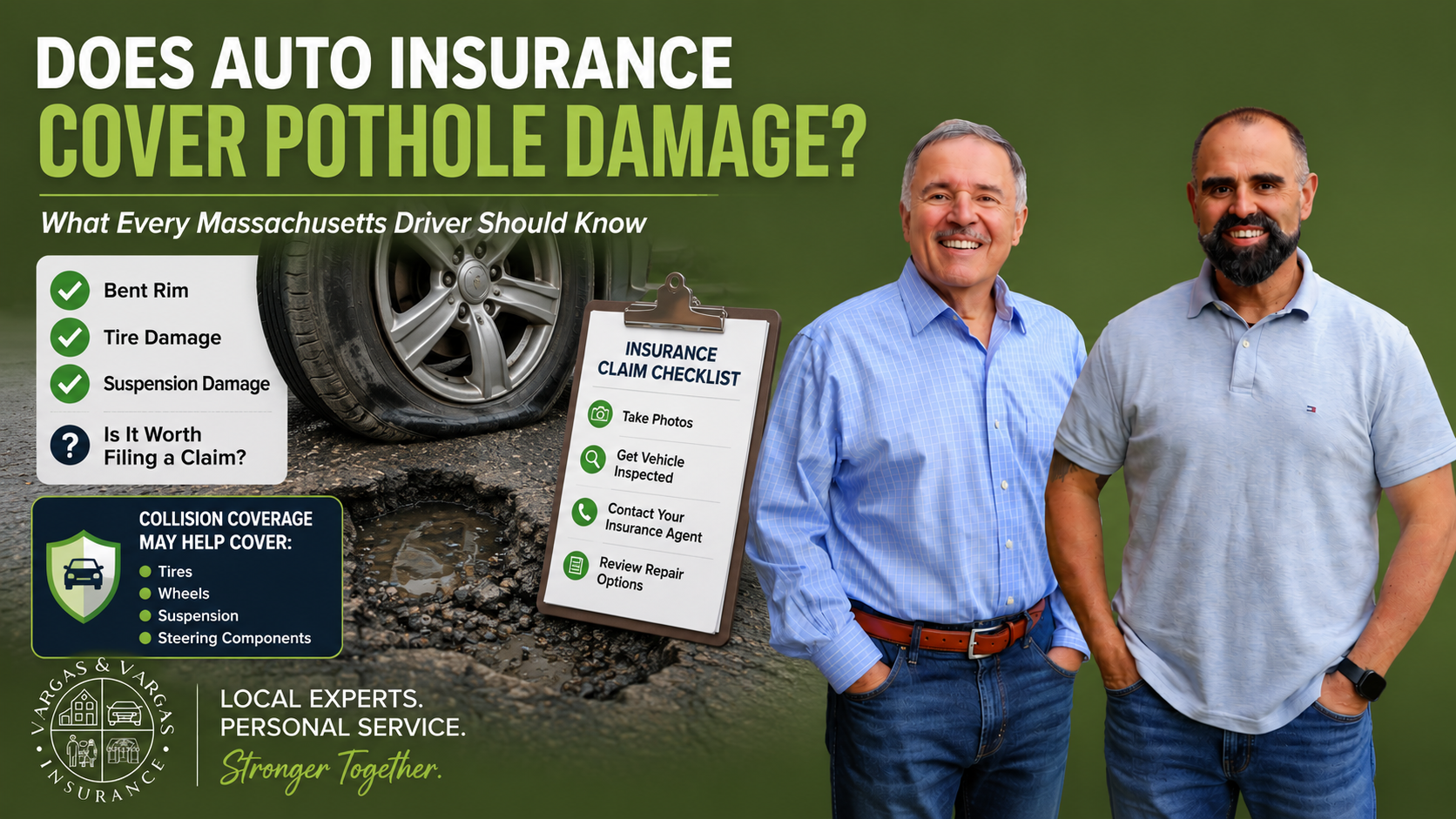
If you've driven on Massachusetts roads after a long winter, you’ve probably hit more than a few potholes. Most of the time, it’s just an uncomfortable jolt. But sometimes that impact can cause real, expensive damage:
- Bent or cracked rims
- Damaged or blown tires
- Alignment issues
- Suspension problems
- Steering damage
One of the most common questions we hear at Vargas & Vargas Insurance is:
“If I hit a pothole and damage my car, will my auto insurance cover it?”
The answer? Maybe — depending on the coverage you carry.
When Is Pothole Damage Covered?
Pothole damage is usually covered under the collision coverage
portion of your auto insurance. Collision coverage helps pay for repairs when your car is damaged by hitting an object — and yes, that includes a pothole.
If your vehicle suffers rim damage, blown tires, steering issues, or suspension problems due to the impact, collision coverage may help pay for repairs. But remember: your deductible applies.
Example: If repairs cost $1,500 and your deductible is $500, your insurer may pay $1,000.
When Might It Not Make Sense to File a Claim?
Before filing a claim, consider your deductible. Many pothole repairs cost only a few hundred dollars. If your deductible is $500 or $1,000, filing a claim may not benefit you financially. In some cases, paying out of pocket is the smarter route.
Because every situation is different, it’s always a good idea to talk with your insurance advisor before filing.
What Types of Damage Can Potholes Cause?
Many drivers assume potholes only damage tires. Unfortunately, that’s just the beginning.
A severe hit can cause:
- Tire blowouts
- Bent or cracked wheels
- Steering problems
- Suspension damage
- Alignment issues
- Damage to shocks, struts, or control arms
Sometimes the damage doesn’t appear immediately. Watch for pulling to one side, vibration, uneven tire wear, or unusual noises in the days or weeks following the impact.
What Should You Do If You Hit a Pothole?
1. Pull Over Safely
Inspect your vehicle for obvious damage such as bulging tires or bent wheels.
2. Take Photos
Photograph the pothole, your tire or wheel, and any visible damage. This documentation can help support an insurance claim or municipal reimbursement request.
3. Get Your Vehicle Inspected
If you notice vibrations, pulling, or steering issues, have a mechanic check it immediately — hidden damage can get worse if ignored.
4. Contact Your Insurance Agent
Before filing a claim, talk with your agent to determine whether it's worth filing based on repair costs and your deductible.
Can the City or Town Pay for the Damage?
Sometimes — but don’t count on it.
Massachusetts cities and towns sometimes offer pothole damage reimbursement, but policies vary and they typically require strict documentation. Reimbursement is not guaranteed, but it’s worth checking with your local DPW if the damage is significant.
How Vargas & Vargas Can Help
Understanding your auto insurance before you need it can save you stress, time, and money. We’ll help you understand exactly what is — and isn’t — covered under your current policy.
And unlike many agencies, we don’t simply renew your policy every year.
Our team proactively reviews your auto insurance at renewal to ensure you’re still getting the best value. If we find a better option that lowers your premium or improves your coverage, we reach out with recommendations.
Our job is to help you stay protected — without you having to monitor the insurance market yourself.
The Bottom Line
Pothole damage is often covered — if
you have collision coverage. Whether you should file a claim depends on the extent of the damage and your deductible.
If you’re not sure what your policy covers or whether you’re overpaying, reach out to Vargas & Vargas Insurance for a quick review. We’re here to help you navigate the bumps — and potholes — on the road.