

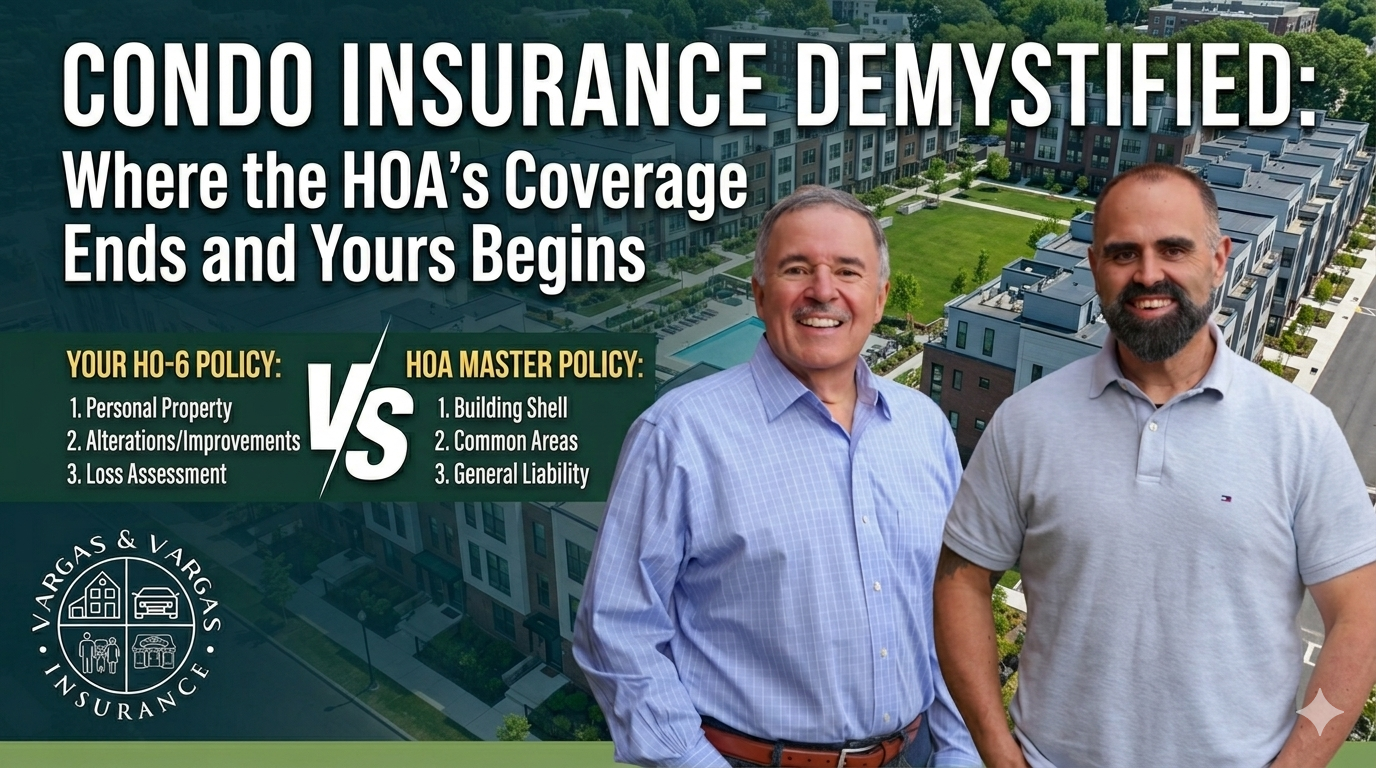
One of the biggest misconceptions among condo owners is the belief that the Homeowners Association (HOA) master insurance policy covers everything. It doesn’t — not even close. A condo owner technically owns only the “airspace” inside their unit, while the building itself belongs (and is insured) collectively through the association. That’s why understanding where the HOA’s coverage stops and where your personal HO‑6 policy begins is critical to avoiding expensive surprises.
The HOA Master Policy vs. Your HO‑6 Policy
Your HOA carries a master insurance policy that protects the building’s structure and shared areas — but how much it covers inside your unit depends on the type of policy your association has.
Bare Walls Coverage:
This is the most limited. The HOA covers only the basic structure — framing, drywall, and common systems. Everything inside your unit (flooring, cabinets, appliances, fixtures, paint) is your responsibility.
Single Entity Coverage:
The HOA covers original, builder‑grade finishes but not any improvements or renovations. Upgraded kitchens, custom floors, or remodeled bathrooms fall entirely on you.
This is where your HO‑6 condo policy
comes in. It provides “walls‑in” coverage for the interior of your home — your flooring, cabinetry, appliances, lighting, fixtures, personal belongings, liability, and any renovations or upgrades made to your unit.
The Big Scenarios: Water and Fire
Let’s look at the two most common and expensive types of condo claims.
Scenario: A pipe bursts inside your wall.
- If the pipe is a common building pipe and it bursts between units, the HOA’s master policy often covers structural repairs — but not your interior finishes.
- If the pipe serves only your unit, your HO‑6 policy may be responsible for interior repairs, regardless of fault.
- If the damage originates within your unit and spreads to a neighbor, your HO‑6 liability coverage may come into play.
Fire works similarly. The HOA usually covers structural damage, but the HO‑6 covers what’s inside your walls — furniture, electronics, flooring, appliances, and personal property.
The Secret Weapon: Loss Assessment Coverage
When a shared area — like the roof, lobby, elevator, or hallways — is damaged, the HOA submits a claim to its master policy. But here’s the catch: modern HOA deductibles often range from $10,000 to $50,000 or more. When that deductible hits, the association can legally bill every unit owner for their share through a special assessment.
That’s where Loss Assessment Coverage
saves the day.
This inexpensive rider on your HO‑6 policy helps cover your share of HOA‑level expenses, including:
- Master policy deductibles
- Common-area repairs
- Liability claims against the association
Without it, a single storm-damaged roof could result in a surprise bill of several thousand dollars — due immediately. With proper Loss Assessment coverage, your HO‑6 policy can cover that cost, transforming a huge financial hit into a manageable claim.
Understanding these differences helps ensure you’re not exposed to unnecessary risk — and that the next unexpected condo repair doesn’t become a personal financial emergency.