
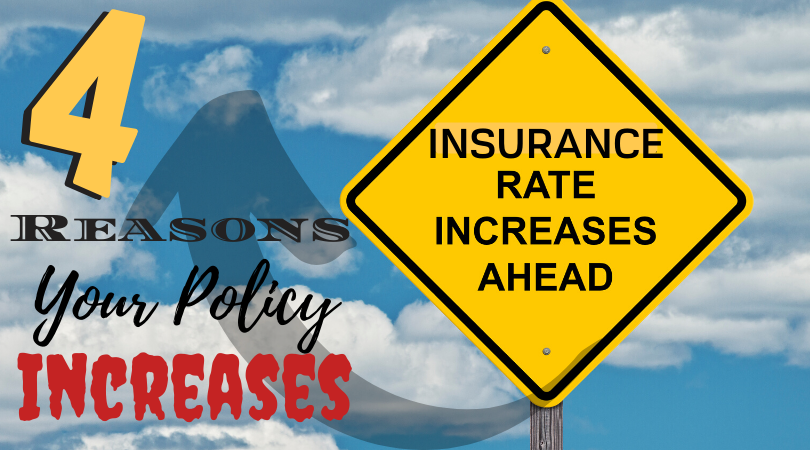
4 Reasons Your Home Insurance Premium Increases. Number 2 Will SHOCK YOU! | Blog | Vargas & Vargas Insurance

There comes that time of year when your Homeowner’s Insurance Renewal arrives in the mail.  You’re happily buzzing through your day when you read the bad news: your premium is increasing!

Panic sets in, then a fair amount of anger, and possibly a bit of anxiety. 

Whether your insurance is included in your mortgage payment through an escrow account , or you pay it separately on your own, panic sets in because you know this increase will impact your household budget. 

Anger arises due to the unfairness of this rate increase.
“How dare they!” “Why are they doing this to me?”

The anxiety is the worst part, but also the possible best part of your response to the premium increase.  Anxiety emerges because you truly don’t know why, nor do you understand, why your insurance carrier would increase your premium in such a seemingly arbitrary way.  But that same anxiety can fuel your desire to learn the answer to that question, and then to drive you forward to take action and seek a favorable resolution.

Here are 4 reasons why your Insurance Carrier might increase your Homeowner’s Insurance Premium; the second one will knock you out of your chair!

  1. Claims .  Have you had a claim in the past twelve months?  This is one of the most common reasons for a premium increase.  But this doesn’t always have to be so!  First, query your Insurance Carrier to determine if there are actions you can take to resolve the issue around the claim. For example, if the claim was due to a burglary, maybe installing a quality security system can relieve the premium-increase-pressure. If that doesn’t work, calling your Independent Insurance Agent is a great solution!  Your Agent can either advocate on your behalf with your current Insurance Carrier, or, find another Homeowner’s policy at a lower rate.
  2. Credit Score .  Insurance Carriers use a specific “Insurance Score” to predict the likelihood of a future claim.  The Insurance Score is different than your Credit Score , but uses similar methodology to create a score based on multiple data points.  Generally speaking, if you have good credit, then you’ll have a good Insurance Score.  But the Insurance Score is out of your control unlike your consumer credit score.  With a consumer score, in the event of an error on your credit report that impacts your score, Federal Regulations permit you to dispute the error and work on restoring your good score.  Your Insurance Score, on the other hand, is an unknown to the consumer.  To prevent arriving at a lower Insurance Score, monitoring and maintaining your consumer Credit Score is important.  Find out more at the Federal Trade Commission website here .
  3. Construction Costs .  Your Homeowners Insurance coverage is based on a calculation to repair or rebuild your home in the event of damage or disaster.  Therefore, the costs of materials and labor specific to your area can impact the calculation of those repair/rebuild costs.  If your local construction costs have increased due to market conditions, then it is a good likelihood your Insurance Premium can increase also.  The good news is that your Independent Insurance Agent can review your entire policy. We recommend a Twice-Yearly Review to determine if there are other areas of your policy where you can derive savings to offset any such increase in your annual premium.
  4. One of the most popular reasons for a rate increase is…..drum roll: State Filed Rate Increase . The insurance carrier will file a request with the state to allow for an increase on their policies that affect all policyholders. The only way around this is to call your independent insurance agent so they can shop other carriers who are competitive. Even after a filed rate increase, most insurance companies will eventually revamp their product portfolio to be more competitive. It’s basically a vicious circle.

Bottom Line: Reduce your anger, panic, and anxiety from an increase in your insurance premium by contacting your Independent Insurance Agent for the best and most expert guidance.

Contact our team at Vargas & Vargas Insurance to learn more about the benefits reviewing your insurance portfolio and what other options you have to reduce this emotional event.

By carlos vargas November 21, 2025
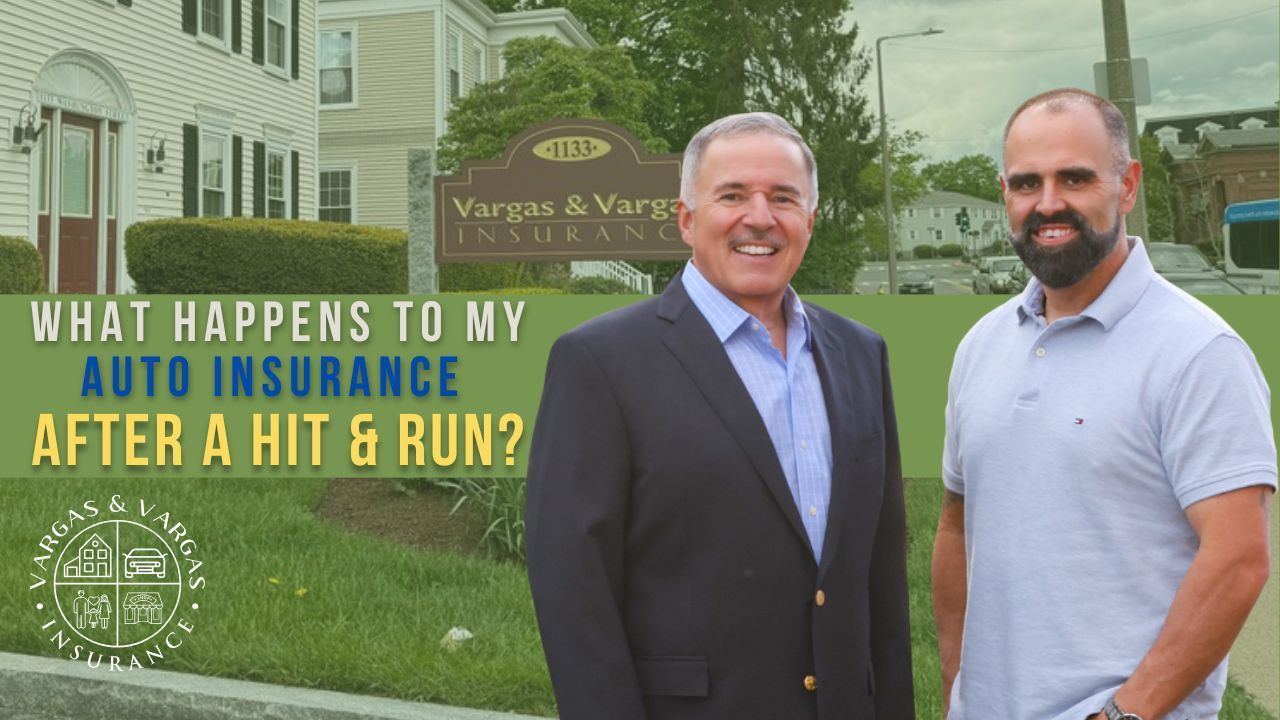
If someone hits your car and drives off, it’s called a hit and run . Imagine leaving the grocery store to find your bumper smashed with no note or witnesses. It’s not just the damage that’s frustrating; it’s the uncertainty about what to do next. Why Are Hit & Runs Confusing? Many drivers aren't sure what to do because we aren’t often taught how insurance works for these situations. But the more you know, the more protected you’ll be. At Vargas & Vargas Insurance , we guide drivers through hit and run claims, breaking down the process in simple terms. Key Questions Answered: What is a hit & run under Massachusetts law? What auto insurance helps in this situation? Will your premium go up? What immediate steps should you take? What Is a "Hit & Run"? A "hit and run" involves another driver damaging your car or injuring you and leaving without giving their info. It could happen in a parking lot, on the street, or even at home. Massachusetts law requires you to report it and file a claim. Coverage That Helps in a Hit & Run Your auto policy can help—if you have the right coverage. Uninsured Motorist Coverage (UM/UIM): Essential for covering injuries to you or passengers. Collision Coverage: Covers car damage but requires you to pay the deductible. Note: Massachusetts is a no-fault state , needing collision and/or UM coverage for protection. Will Your Insurance Rates Rise? It depends. If considered a not-at-fault accident, rates might not increase. However, lack of a police report or a history of claims might affect rates. Reporting it properly is crucial. What Actions Should You Take? Call the police immediately to file a report. Take photos of all damage and surroundings. Seek witnesses or security camera footage. Contact your insurance agent for advice on filing a claim. Keep all records , like police reports and photos. The Bottom Line You can't control reckless drivers, but you can control your preparedness. Here's what you need to know: Have collision and uninsured motorist coverage for protection. A police report is essential. Your agent is your best ally for making claim decisions.  If you’ve returned to your car to find damage without a note, you know the stress. Now you know the steps to take and the protections you need. At Vargas & Vargas Insurance , we’re here to make this simple and stress-free. Unsure if your policy protects you from a hit & run? Call us at 617-298-0655 . Let’s ensure you’re covered before it happens.
By carlos vargas November 21, 2025
In this post, we'll guide you through what happens when someone is injured on your property, how personal liability insurance can provide protection, and the steps you should take immediately if an accident occurs. By the end, you'll understand common scenarios that trigger personal liability coverage, what's included (and not included) in a standard policy, how claims are managed, and practical tips to protect yourself both before and after an accident. Understanding Personal Liability Insurance Personal liability insurance is designed to protect you financially if you are found legally responsible for someone’s injury or damage to their property. Typically, this coverage is part of your homeowners or renters insurance policy. If an incident occurs on your property and you’re held responsible, your personal liability insurance can help cover: Medical expenses for the injured person. Legal defense costs if you’re sued. Settlement or judgment amounts awarded to the injured party. Without this coverage, you could face out-of-pocket expenses which could amount to thousands or even hundreds of thousands of dollars, depending on the situation. Common Injury Scenarios on Your Property Personal liability coverage may be applicable in situations like: A guest slipping on an icy walkway. A child falling off a swing in your backyard. A delivery driver tripping over a loose step. A neighbor’s fence being damaged by a tree falling from your yard.  Accidents can happen even if precautions are taken, and unfortunately, being "careful" doesn't automatically shield you from legal or medical bills. What’s Not Covered It's crucial to understand that personal liability insurance doesn't cover everything. Most policies exclude: Injuries to you or household members. Intentional acts causing harm. Certain high-risk situations, such as injuries from business activities conducted at home (unless you have separate business liability coverage). Understanding these exclusions can prevent surprises and the frustrations often accompanying a denied claim. What Happens After an Injury on Your Property If someone is injured on your property: Get medical help immediately — the priority should be the person’s safety and well-being. Document the incident — take photos, collect witness statements, and record all details. Notify your insurance company — report the incident promptly, even if unsure whether the injured party will make a claim. Avoid admitting fault — stick to the facts when speaking with the injured person and your insurer. Once a claim is filed, your insurance company will: Investigate the incident. Determine whether your policy covers the claim. Handle negotiations, settlements, or defense in court if necessary. How to Protect Yourself Before an Accident Happens While insurance covers the unexpected, prevention is better than reaction. Reduce your risk by: Keeping walkways clear of ice, snow, and clutter. Repairing loose steps, handrails, and flooring. Properly maintaining landscaping and trees. Providing adequate lighting for entrances and pathways. Regular maintenance not only keeps your property safe but shows responsible behavior if a claim is filed. The Role of Your Insurance Broker An experienced insurance broker can help you: Review your policy to ensure adequate liability coverage limits. Clarify exclusions so you understand what's not covered. Guide you through the claims process if an injury occurs. Suggest umbrella insurance for additional liability protection beyond your standard policy limits. Having a broker means you aren't navigating these situations alone — you'll have someone familiar with your policy advocating for you. The Bottom Line Accidents can occur anywhere to anyone at any time. If someone gets hurt on your property, personal liability insurance can safeguard your finances, cover legal costs, and help manage the situation professionally. The key is understanding how your coverage works before you need it. This involves knowing your policy limits, understanding exclusions, and ensuring you have sufficient protection in place. Additional Resources: Insurance Information Institute – Understanding Liability Coverage NAIC – Consumer’s Guide to Home Insurance